Category: Gaming

  • What Is G-Sync, and How Does It Enhance Gaming?

    What Is G-Sync, and How Does It Enhance Gaming?

    If you’re a gamer looking to elevate your gaming experience, understanding G-Sync technology is crucial. Imagine a world where screen tearing and stuttering are mere relics of the past. With G-Sync, your visuals become smoother, your gameplay more responsive, and your overall immersion heightened. But how exactly does this technology work its magic, and what benefits does it bring beyond just eliminating visual hiccups? Stay tuned to uncover the secrets behind G-Sync and how it reshapes the gaming landscape for the better.

    Understanding G-Sync Technology

    Exploring how G-Sync enhances gaming performance can provide valuable insights into its technological prowess. G-Sync is a revolutionary technology developed by NVIDIA to synchronize the refresh rates of a monitor with the frame rates of a graphics card. By doing so, it eliminates screen tearing and stuttering, resulting in a smoother and more immersive gaming experience.

    When you enable G-Sync on a compatible monitor, you’ll notice a significant improvement in the overall visual quality of your games. The technology dynamically adjusts the monitor’s refresh rate to match the varying frame rates produced by your GPU, ensuring that each frame is displayed at the optimal time. This synchronization reduces input lag and motion blur, making fast-paced games feel more responsive and fluid.

    Moreover, G-Sync works seamlessly with both NVIDIA and AMD graphics cards, offering flexibility to gamers who may switch between different GPU brands. This compatibility ensures that you can enjoy the benefits of G-Sync regardless of your graphics card choice, enhancing your gaming performance across the board.

    Benefits of G-Sync in Gaming

    G-Sync in gaming enhances visual quality and responsiveness by synchronizing monitor refresh rates with graphics card frame rates. This synchronization eliminates screen tearing and stuttering issues, providing you with a smoother and more immersive gaming experience. By ensuring that the monitor’s refresh rate matches the GPU’s frame rate, G-Sync reduces input lag, resulting in more precise and responsive gameplay.

    Another benefit of G-Sync is the elimination of visual artifacts such as ghosting, which can occur when the monitor refresh rate and GPU frame rate are out of sync. This technology also allows for seamless transitions between different frame rates, maintaining image clarity during fast-paced gameplay.

    Furthermore, G-Sync helps in reducing eye strain and fatigue during extended gaming sessions by delivering consistent frame rates and eliminating visual distractions. Overall, G-Sync enhances your gaming experience by providing smooth, tear-free visuals and improved responsiveness, making it a valuable addition to any gaming setup.

    How G-Sync Enhances Visuals

    Enhancing visuals with G-Sync technology elevates the overall gaming experience by eliminating screen imperfections and ensuring seamless image rendering. By synchronizing the refresh rates of your monitor with the GPU, G-Sync reduces screen tearing, stuttering, and input lag. This means that every frame produced by your graphics card is displayed without any disruptions, resulting in a smoother and more immersive visual experience.

    G-Sync’s ability to adjust the monitor’s refresh rate dynamically based on the GPU’s rendering speed ensures that each frame is displayed at the optimal time. This prevents issues like ghosting or motion blur, particularly in fast-paced games where quick reactions are crucial. The technology also supports a wide range of refresh rates, allowing for flexibility in displaying both high and low frame rates without distortion.

    Additionally, G-Sync enhances the clarity of visuals by reducing distractions caused by screen tearing, providing sharper images and more vibrant colors. This ensures that you can fully appreciate the graphics and details intended by game developers, resulting in a more visually pleasing and engaging gaming experience.

    Implementing G-Sync for Better Gameplay

    To optimize your gaming experience with G-Sync, ensure that your hardware and settings are configured correctly for smoother gameplay. Start by checking if your monitor is G-Sync compatible and that it has the feature enabled in the settings. This is crucial for experiencing the benefits of G-Sync, such as eliminating screen tearing and reducing input lag.

    Additionally, make sure your graphics card supports G-Sync technology. Nvidia GPUs are typically compatible with G-Sync, but it’s essential to check for specific model requirements. Keeping your graphics card drivers up to date is also vital for optimal performance.

    Adjusting in-game settings can further enhance your G-Sync experience. Aim for a frame rate that stays within the G-Sync range of your monitor to fully utilize its capabilities. Experiment with different graphics settings to find the right balance between visual quality and performance.

    Gaming

    [product_category category=”gaming” per_page=”10″ columns=”2″ orderby=”date” order=”rnde”]
  • The Future of Gaming Monitors: 8K and Beyond

    The Future of Gaming Monitors: 8K and Beyond

    As you contemplate the future of gaming monitors, envision a realm where visuals are sharper, details crisper, and immersion deeper than ever before. The journey towards 8K and beyond beckons, promising a horizon where technological advancements blend seamlessly with your gaming experience. Stay tuned as we explore the possibilities that lie ahead, where innovation and realism converge to shape the gaming landscape of tomorrow.

    Evolution of Display Technology

    Display technology has rapidly evolved in recent years, bringing significant advancements to the gaming monitor industry. Manufacturers have been pushing the boundaries of resolution, refresh rates, and panel technologies to enhance the gaming experience. One of the key developments has been the shift towards higher resolutions, such as 4K and now even 8K, providing incredibly sharp and detailed visuals.

    Refresh rates have also seen a substantial increase, with many gaming monitors now offering 144Hz, 240Hz, or even higher, ensuring smoother gameplay with reduced motion blur. Panel technologies like IPS, TN, and VA have improved color accuracy, response times, and viewing angles, catering to different gamer preferences.

    Furthermore, the introduction of features like HDR (High Dynamic Range) support and adaptive sync technologies like G-Sync and FreeSync has further enhanced the visual quality and performance of gaming monitors. These advancements in display technology haven’t only made games look more immersive and realistic but have also contributed to a smoother and more responsive gaming experience overall.

    Benefits of 8K Resolution

    With 8K resolution, you can expect unparalleled clarity and detail in your gaming visuals. The primary benefit of 8K resolution is the incredibly sharp image quality it offers. At 7680 x 4320 pixels, an 8K display provides four times the resolution of a 4K screen and sixteen times that of a standard Full HD monitor. This means that every texture, character, and environment in your game will be rendered with astonishing precision, making the gaming experience truly immersive.

    Moreover, the increased pixel density of an 8K display eliminates the visibility of individual pixels, creating a smoother and more realistic image. This high level of detail allows you to see finer elements in the game that may have been missed on lower resolution screens. Additionally, with 8K resolution, you can enjoy larger screen sizes without sacrificing image quality, as the higher pixel count ensures sharpness even on bigger displays. Overall, 8K resolution elevates your gaming experience by bringing visuals closer to reality than ever before.

    Challenges of Higher Resolutions

    Higher resolutions present a new set of challenges for gamers looking to optimize their visual experience. One major challenge is the need for more powerful hardware to handle the increased pixel count. With higher resolutions like 8K, you’ll require a beefier graphics card and a faster processor to ensure smooth gameplay without lag or stuttering. This can significantly increase the overall cost of your gaming setup.

    Another challenge is the availability of content optimized for such high resolutions. While some games and media are starting to support 8K, the majority of existing content is still designed for lower resolutions. This can lead to upscaling issues and potential loss of visual quality when displaying lower resolution content on a high-resolution monitor.

    Additionally, higher resolutions can strain your eyes and require you to sit closer to the screen to fully appreciate the increased detail. This may not be comfortable for everyone, especially during long gaming sessions. Adjusting to the higher pixel density may take some time as well, as text and UI elements can appear smaller and more challenging to read.

    Future Innovations and Beyond

    Looking ahead, advancements in gaming monitors are poised to revolutionize the way you experience virtual worlds. Imagine stepping into a gaming universe where the boundaries between reality and fiction blur seamlessly. The future holds promise for innovations like holographic displays, offering a three-dimensional experience that transports you directly into the heart of the action.

    These monitors may also feature built-in eye-tracking technology, allowing for more immersive gameplay by responding to your gaze in real-time. Furthermore, curved screens are likely to become standard, providing a panoramic view that wraps around your field of vision, enhancing depth perception and creating a more engaging environment.

    Additionally, advancements in refresh rates and response times will ensure smoother gameplay with minimal motion blur, giving you a competitive edge in fast-paced scenarios. As technology continues to evolve, the possibilities for gaming monitors are limitless, promising an exciting future filled with unparalleled visual experiences.

    Gaming

    [product_category category=”gaming” per_page=”10″ columns=”2″ orderby=”date” order=”rnde”]

  • Which Gaming Headset Brands Are Most Reliable?

    Which Gaming Headset Brands Are Most Reliable?

    When it comes to choosing a reliable gaming headset brand, the market offers a multitude of options. Factors such as build quality, sound performance, and comfort play significant roles in determining which brand is the most trustworthy. Some brands have established themselves as the go-to choice for gamers seeking durability and consistent performance. Before making your decision, consider the key aspects that contribute to a headset’s reliability. These brands have earned their reputation for a reason, and knowing which ones they are could make a world of difference in your gaming experience.

    Factors to Consider

    When selecting a gaming headset, prioritize comfort, sound quality, and durability to ensure an optimal gaming experience. Comfort is crucial for those long gaming sessions, so look for headsets with cushioned ear cups and an adjustable headband to prevent discomfort.

    Sound quality is paramount in immersing yourself in the game world, so opt for headsets with clear audio, powerful bass, and good noise isolation. Durability is also key as you want a headset that can withstand the wear and tear of daily use. Ensure the materials are sturdy and the build quality is reliable to avoid any potential breakdowns.

    Additionally, consider the connectivity options of the headset. Wireless headsets offer freedom of movement, but make sure they’ve a stable connection to prevent lag or interference. Wired headsets, on the other hand, provide a consistent connection but limit your range. Evaluate your gaming setup and preferences to choose the best connectivity option for your needs.

    Top Reliable Brands

    For gamers seeking top-notch reliability in their gaming headsets, exploring the offerings from established brands is essential. Leading the pack in terms of reliability are brands like SteelSeries, known for their durable construction and long-lasting performance. SteelSeries headsets consistently receive high marks for their build quality and reliability, making them a top choice for many gamers.

    Another reliable brand to consider is HyperX, renowned for producing gaming headsets that aren’t only reliable but also comfortable for long gaming sessions. HyperX headsets are praised for their solid construction and dependable performance, making them a popular option among gamers looking for a reliable headset.

    Astro Gaming is also a brand that stands out for its reliability. Known for their high-quality audio and sturdy design, Astro Gaming headsets are favored by many professional gamers for their durability and consistent performance. When it comes to reliable gaming headsets, considering brands like SteelSeries, HyperX, and Astro Gaming can help you make a sound investment in a headset that will last.

    Customer Reviews Analysis

    Considering the reliability of gaming headset brands like SteelSeries, HyperX, and Astro Gaming, the next step involves analyzing customer reviews to gain insights into user experiences and satisfaction levels. Customer reviews play a crucial role in understanding the real-world performance of gaming headsets. By scouring through reviews on various platforms, you can uncover common themes regarding audio quality, comfort, durability, and overall user satisfaction.

    When delving into customer reviews for SteelSeries headsets, you may notice a trend towards positive feedback regarding their clear microphone quality and comfortable designs.

    HyperX headsets, on the other hand, often receive praise for their exceptional sound output and value for money.

    Astro Gaming headsets tend to stand out for their premium build quality and immersive sound experience, as highlighted by many satisfied users.

    Warranty and Support Services

    Exploring the warranty and support services provided by these gaming headset brands offers valuable insights into the additional benefits and peace of mind they offer to customers.

    When evaluating gaming headset brands, it’s essential to consider the length and coverage of the warranty. Brands like SteelSeries and Razer often provide warranties ranging from one to two years, ensuring that you’re covered in case of any manufacturing defects or malfunctions.

    Additionally, the quality of customer support plays a crucial role in the overall reliability of a brand. Companies such as Logitech and HyperX are known for their responsive customer service teams that can assist you with any issues or inquiries promptly.

    Having access to reliable support services can make a significant difference when facing technical difficulties or needing guidance on product usage. By choosing a gaming headset brand with strong warranty coverage and excellent support services, you can rest assured that your investment is protected, and any concerns you may have will be addressed efficiently.

    Gaming

    [product_category category=”gaming” per_page=”10″ columns=”2″ orderby=”date” order=”rnde”]
  • What Are the Best Ultrawide Gaming Monitors?

    What Are the Best Ultrawide Gaming Monitors?

    If you’re on the quest for the ultimate gaming setup, navigating the world of ultrawide monitors can be overwhelming. With a myriad of options boasting cutting-edge technology and impressive specs, it’s essential to pinpoint which features align best with your gaming preferences. From high resolutions to lightning-fast refresh rates, each monitor brings something unique to the table. So, before you make your decision, ensure you know exactly what to look for in the best ultrawide gaming monitor to elevate your gaming experience to new heights.

    Top 5 Ultrawide Gaming Monitors

    When selecting the best ultrawide gaming monitor, consider these top 5 options for an immersive gaming experience.

    The first contender is the ASUS ROG Swift PG35VQ, boasting a 35-inch curved display with a 3440×1440 resolution and a buttery smooth 200Hz refresh rate.

    Next up is the Acer Predator X34, a 34-inch monitor with NVIDIA G-Sync technology for tear-free gaming and a refresh rate of up to 120Hz.

    The LG 34GN850-B also makes the list with a 34-inch Nano IPS display, 3440×1440 resolution, and a fast 144Hz refresh rate.

    Moving on, the Samsung Odyssey G9 catches the eye with its massive 49-inch screen, 5120×1440 resolution, and a rapid 240Hz refresh rate.

    Last but not least, the AOC Agon AG352UCG6 impresses with its 35-inch curved display, 3440×1440 resolution, and NVIDIA G-Sync support for seamless gameplay.

    These top 5 ultrawide gaming monitors are sure to elevate your gaming experience to new heights.

    Key Features to Consider

    Consider key features like display resolution, refresh rate, and connectivity options when choosing the best ultrawide gaming monitor for your setup. Display resolution is crucial for crisp visuals. Opt for a monitor with a high resolution such as 3440×1440 or even 5120×1440 for a truly immersive gaming experience. A higher resolution allows for more detail and clarity in games.

    Next, the refresh rate plays a significant role in gaming smoothness. A higher refresh rate, like 144Hz or 240Hz, ensures that motion appears fluid and reduces motion blur, giving you a competitive edge in fast-paced games.

    Connectivity options are vital for seamless integration with your gaming setup. Look for monitors with multiple HDMI and DisplayPort inputs, as well as USB ports for peripherals. This versatility allows you to connect various devices simultaneously without the need for constant cable swapping.

    Comparison of Refresh Rates

    To understand the significance of refresh rates in ultrawide gaming monitors, let’s delve into their impact on your gaming experience. Refresh rates refer to the number of times per second a monitor updates the image on the screen. The higher the refresh rate, the smoother the motion appears, reducing motion blur and providing a more fluid gaming experience.

    When comparing refresh rates, you’ll typically encounter 60Hz, 120Hz, 144Hz, or even 240Hz monitors. A higher refresh rate allows for quicker screen updates, resulting in reduced input lag and smoother visuals, especially in fast-paced games. The difference between 60Hz and 144Hz, for instance, can be quite noticeable in terms of overall responsiveness and visual clarity.

    For competitive gaming, a higher refresh rate monitor can give you an edge over opponents by providing more accurate and up-to-date visuals. However, it’s essential to ensure your graphics card can support the higher refresh rate for optimal performance. Ultimately, choosing the right refresh rate depends on your gaming preferences and the types of games you play.

    Pros and Cons of Each Model

    In assessing the various models of ultrawide gaming monitors, it’s essential to weigh the pros and cons of each to make an informed decision.

    The Alienware AW3420DW offers stunning visuals with its WQHD resolution, vibrant colors, and G-Sync compatibility, perfect for an immersive gaming experience. However, its high price may deter budget-conscious gamers.

    On the other hand, the LG 34GN850-B provides excellent value with its Nano IPS panel, high refresh rate, and wide color gamut, ideal for both gaming and content creation. Yet, some users may find its HDR performance lacking compared to pricier models.

    The Samsung Odyssey G9 stands out with its impressive 240Hz refresh rate, deep blacks, and immersive 1000R curve, but its steep cost and the potential for compatibility issues may give pause to some buyers.

    Ultimately, your choice should align with your priorities, whether it be performance, value, or specific features.

    Gaming

    [product_category category=”gaming” per_page=”10″ columns=”2″ orderby=”date” order=”rnde”]
  • How Do Refresh Rates Affect Gaming Monitor Performance?

    How Do Refresh Rates Affect Gaming Monitor Performance?

    When it comes to gaming monitor performance, have you ever considered how refresh rates impact your gameplay? The refresh rate of your monitor can significantly influence the smoothness of visuals and responsiveness during gaming sessions. But what exactly does this mean for your overall gaming experience? Stay tuned to uncover the intricate relationship between refresh rates and gaming monitor performance, and how it might just change the way you view your favorite games.

    Importance of Refresh Rates

    Understanding the importance of refresh rates is crucial when assessing gaming monitor performance. Refresh rate refers to how many times per second your monitor updates with new images. A higher refresh rate means smoother visuals and less motion blur during fast-paced gameplay. For gamers, this can make a significant difference in overall gaming experience.

    When the refresh rate is low, such as 60Hz, you may experience screen tearing, where the monitor displays multiple frames at once, causing a disjointed image. Higher refresh rates, like 144Hz or 240Hz, can eliminate this issue, providing a more seamless and immersive gaming experience.

    In addition to reducing screen tearing, higher refresh rates also improve responsiveness. With a higher refresh rate, the monitor can display new frames quicker, allowing for faster reaction times in games. This can give you a competitive edge, especially in fast-paced multiplayer games where split-second decisions can make all the difference.

    Smooth Gameplay Experience

    To ensure a smooth gameplay experience, prioritize a gaming monitor with a high refresh rate. A high refresh rate, such as 144Hz or 240Hz, allows for more frames to be displayed per second, resulting in smoother motion and reduced motion blur during fast-paced gaming moments. When the refresh rate is low, the screen may struggle to keep up with the rapid movements in games, leading to choppy visuals and potential input lag. By investing in a monitor with a high refresh rate, you can enjoy a more immersive gaming experience with fluid animations and responsive gameplay.

    With a high refresh rate monitor, you’ll notice a significant difference in how smooth and fluid your games appear. The increased number of frames being displayed each second makes motion look more natural and seamless, enhancing your overall gaming experience. Whether you’re exploring vast open worlds, engaging in intense multiplayer battles, or racing against the clock, a high refresh rate monitor can make every moment feel more lifelike and engaging.

    Responsiveness and Input Lag

    How do refresh rates impact the responsiveness and input lag of your gaming monitor?

    The refresh rate of your monitor plays a crucial role in determining how quickly the screen updates with new information from your graphics card. A higher refresh rate means that the monitor can display new frames more frequently, resulting in smoother transitions between images. This improved responsiveness can make a significant difference in fast-paced games where quick reactions are essential.

    When it comes to input lag, a higher refresh rate can help reduce the delay between your actions on the keyboard or mouse and when those actions are displayed on the screen. Lower input lag means that the game responds more rapidly to your commands, giving you a competitive edge in multiplayer games or when precision is key.

    Choosing the Right Refresh Rate

    Wondering which refresh rate to choose for your gaming monitor to optimize performance? When selecting the right refresh rate, consider the balance between smooth visuals and hardware requirements. Typically, gaming monitors offer refresh rates of 60Hz, 120Hz, 144Hz, 240Hz, and even higher.

    For casual gamers or those on a budget, a 60Hz monitor can suffice, providing a decent gaming experience without breaking the bank. However, for competitive gamers or those seeking a more fluid display, higher refresh rates like 144Hz or 240Hz are recommended. These faster refresh rates result in smoother motion, reduced motion blur, and increased responsiveness, which can significantly enhance your gaming performance.

    Keep in mind that achieving higher refresh rates also requires a more powerful graphics card to match the monitor’s capabilities. Therefore, it’s essential to assess your hardware capabilities and gaming preferences when deciding on the ideal refresh rate for your gaming monitor. Ultimately, choosing the right refresh rate can elevate your gaming experience by providing smoother gameplay and better overall performance.

    Gaming

    [product_category category=”gaming” per_page=”10″ columns=”2″ orderby=”date” order=”rnde”]

  • How to Assemble a Gaming Chair: Step-by-Step Guide

    How to Assemble a Gaming Chair: Step-by-Step Guide

    Once you’ve invested in a new gaming chair, the next crucial step is assembling it correctly to ensure optimal comfort and support during your gaming sessions. Starting with the basics of unpacking and organizing the parts, you’ll soon find yourself on the path to constructing your ultimate gaming throne. But remember, the real key lies in the precise alignment and attachment of each component, leading to a sturdy and ergonomic chair that will elevate your gaming experience to new heights.

    Tools and Equipment Needed

    Before you begin assembling your gaming chair, gather all the necessary tools and equipment. Make sure you have a screwdriver, preferably with interchangeable heads, for securing bolts and screws. It’s also useful to have a pair of pliers on hand for tightening certain parts. Check for any included Allen keys or wrenches specific to your chair model, as these are often necessary for assembly.

    Additionally, have a clear workspace with enough room to maneuver and lay out all the parts. A clean area will help prevent losing small pieces and make the assembly process smoother. Lay out all the components of the chair according to the instruction manual, ensuring you have everything needed before starting. Keep the manual nearby for easy reference throughout the assembly process.

    Having a friend assist you can also be beneficial, especially when dealing with heavier parts or aligning pieces together. With all the tools and equipment ready, you’re now prepared to start assembling your gaming chair efficiently and correctly.

    Preparing the Workspace

    Create a spacious and clutter-free area to serve as your workspace for assembling the gaming chair. Clear out any unnecessary items from the area to ensure you have enough room to lay out all the parts of the chair. A flat and stable surface, like a table or a clean floor, is ideal for this task. Make sure the area is well-lit to help you see all the components and instructions clearly.

    Having the right tools and equipment within reach can also help streamline the assembly process. Keep the tools provided with the chair or any additional tools you may need nearby. This will save you time from constantly searching for the right tool during the assembly.

    Consider using a mat or a soft cloth to protect both the floor and the chair components from scratches or damage during assembly. Additionally, having a small container or bowl to hold screws and smaller parts can prevent them from getting misplaced. By setting up a well-organized workspace, you can make the assembly process more efficient and enjoyable.

    Step-by-Step Assembly Instructions

    Consider laying out all the chair parts in an organized manner on your workspace before beginning the assembly process. This step will help you easily identify each piece and streamline the assembly.

    Start by attaching the wheels to the base of the chair. Simply push the wheels into the designated slots until they click securely into place.

    Next, attach the gas lift cylinder to the center of the base by inserting it into the provided hole and applying pressure until it’s firmly in position.

    After securing the base components, it’s time to attach the seat. Align the screw holes on the seat with those on the base and use the provided screws to fasten them together. Ensure the seat is stable before moving on to attach the backrest. Connect the backrest to the seat by sliding it into place and securing it with the corresponding screws.

    Once the seat and backrest are securely attached, the final step is to add the armrests. Align the armrests with the designated slots on the seat and secure them using the provided screws.

    Congratulations, you have successfully assembled your gaming chair!

    Final Adjustments and Testing

    To ensure optimal comfort and functionality, make any necessary final adjustments and conduct thorough testing of your newly assembled gaming chair.

    Start by adjusting the height of the chair to ensure your feet are flat on the ground and your knees are at a 90-degree angle.

    Next, adjust the armrests to a comfortable height that allows your arms to rest naturally while gaming.

    Ensure that the lumbar support is positioned correctly to support your lower back and promote good posture during long gaming sessions.

    Once you’ve made these adjustments, it’s time to test the chair for stability and comfort. Sit in the chair and rock back and forth gently to check for any wobbling or instability.

    Make sure the chair reclines smoothly and locks into place securely at your desired angle. Test the swivel function to ensure smooth rotation without any resistance or squeaking noises.

    Gaming

    [product_category category=”gaming” per_page=”10″ columns=”2″ orderby=”date” order=”rnde”]
  • Compact Gaming Desks for Apartments and Small Rooms

    Compact Gaming Desks for Apartments and Small Rooms

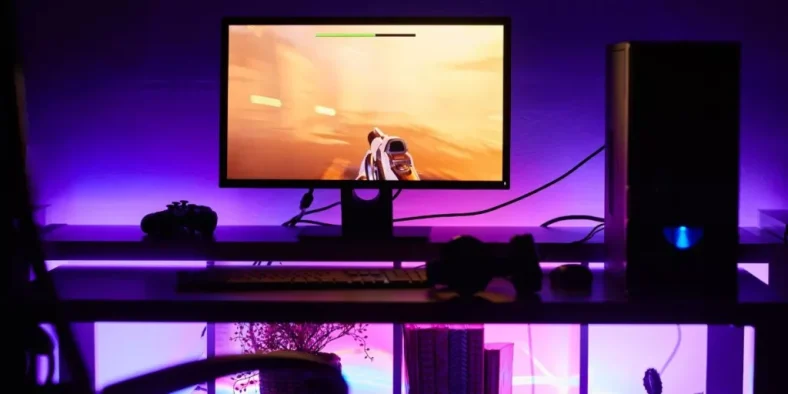
    When considering compact gaming desks for your apartment or small room, you’ll find that functionality and space optimization are key factors to keep in mind. Imagine having a dedicated gaming station that fits seamlessly into your limited space without compromising on comfort or style. By exploring innovative designs and smart storage solutions, you can elevate your gaming experience while making the most of your compact environment. Stay tuned to discover how these desks can transform your gaming setup into a practical and visually appealing hub for your gaming adventures.

    Space-Saving Gaming Desk Options

    When selecting a compact gaming desk, consider opting for multi-functional designs to maximize space efficiency. Look for desks that offer built-in storage solutions such as shelves, drawers, or cable management systems to keep your gaming setup organized and clutter-free. These features can help you make the most of your limited space while providing a dedicated area for all your gaming essentials.

    Another space-saving option to consider is a compact gaming desk with a foldable or adjustable design. These desks can easily be folded up or adjusted to fit into tight corners or against walls when not in use, allowing you to free up space for other activities. Additionally, look for desks with ergonomic designs that prioritize comfort and functionality, such as adjustable height settings or built-in monitor stands.

    Features to Look for in Compact Desks

    Consider key features such as built-in storage solutions, adjustable designs, and ergonomic considerations when choosing a compact gaming desk. Built-in storage solutions are essential for keeping your gaming area organized and clutter-free. Look for desks with shelves, drawers, or cable management systems to help you maintain a tidy setup.

    Adjustable designs allow you to customize the desk height and angle to suit your comfort and gaming preferences. Ergonomic considerations such as proper wrist support, monitor height adjustment, and adequate legroom can make long gaming sessions more comfortable and reduce the risk of strain or injury.

    Additionally, consider desks with sturdy construction to support your gaming equipment and withstand heavy daily use. Cable management features are also important to keep wires neatly organized and prevent tangling. Compact desks with a minimalist design can help save space in small rooms while still providing ample room for your gaming setup.

    Prioritize features that cater to your specific gaming needs and preferences to create a functional and ergonomic gaming area.

    Tips for Maximizing Small Gaming Areas

    To maximize small gaming areas, prioritize multifunctional furniture that can serve dual purposes. Look for a desk that offers storage solutions like shelves or drawers to keep your gaming setup organized and clutter-free. Consider a desk that can also function as a workspace for other activities, such as studying or working from home. Opt for a chair that’s comfortable for long gaming sessions but can also be used for seating when not gaming.

    Utilize wall space efficiently by installing shelves or wall-mounted storage units to hold gaming consoles, controllers, and other accessories. This helps free up floor space for movement and prevents the area from feeling cramped. Invest in cable management solutions to keep wires tidy and out of the way, reducing the risk of tripping hazards and creating a cleaner gaming environment.

    Think vertically when planning your small gaming area. Utilize tall bookshelves or storage towers to maximize storage space without taking up valuable floor space. Consider incorporating foldable or stackable furniture that can be easily stored away when not in use to create a more versatile gaming area.

    Stylish Designs for Small Spaces

    Maximizing style in small spaces requires clever utilization of compact furniture and creative design solutions. When it comes to stylish designs for small rooms, opt for multifunctional pieces that serve both practical and aesthetic purposes. Look for sleek gaming desks with built-in storage compartments or wall-mounted options to save floor space. Consider desks with minimalist designs and clean lines to create a modern look without overwhelming the room.

    Choose a color scheme that complements the rest of your decor while making the space feel larger and more cohesive. Neutral tones like white, gray, or light wood finishes can help brighten up the room and give it an airy feel. Add pops of color through accessories like desk organizers, gaming chairs, or wall art to inject personality into the space.

    When selecting additional furniture or decor items, prioritize items that can be easily tucked away or folded when not in use to maintain a clutter-free environment. Remember, less is more when it comes to small spaces, so focus on quality over quantity to achieve a stylish and functional gaming setup.

    Gaming

    [product_category category=”gaming” per_page=”10″ columns=”2″ orderby=”date” order=”rnde”]

  • Best Gaming Headsets for Audiophiles in 2024

    Best Gaming Headsets for Audiophiles in 2024

    If you’re an audiophile seeking the pinnacle of gaming audio quality in 2024, the latest headsets on the market will undoubtedly catch your attention. These cutting-edge devices are meticulously engineered to elevate your gaming experience to new heights, promising unrivaled sound precision and clarity. The advancements in audio technology incorporated into these headsets are set to redefine how you perceive in-game audio cues and immerse yourself in the virtual worlds you explore. So, which gaming headsets will emerge as the top choice for discerning audiophiles this year?

    High-Fidelity Audio Performance

    For audiophiles seeking an immersive gaming experience, high-fidelity audio performance is essential. When it comes to gaming headsets, superior sound quality can make all the difference in your gameplay. You want to feel like you’re right in the heart of the action, hearing every footstep, gunshot, or rustle of leaves with crystal clarity. The best gaming headsets for audiophiles deliver precise, rich sound that enhances your gaming experience to a whole new level.

    These high-fidelity headsets are designed to reproduce audio as faithfully as possible, ensuring that you don’t miss a single detail in the game’s sound design. From the subtle background music to the explosive sound effects, every sound is rendered with precision and depth. With high-fidelity audio performance, you can pinpoint the exact location of your enemies, immerse yourself in the game’s atmosphere, and react faster to in-game events.

    Investing in a gaming headset with high-fidelity audio capabilities is a game-changer for audiophiles who want to elevate their gaming experience. So, if you’re serious about sound quality and immersion, a high-fidelity gaming headset is a must-have accessory for your gaming setup.

    Immersive Surround Sound Experience

    Experience the depth and realism of immersive surround sound with gaming headsets designed to transport you directly into the heart of the game. These cutting-edge headsets utilize advanced audio technologies to create a 360-degree soundscape that immerses you in the game world like never before. Imagine hearing the footsteps of your enemies sneaking up behind you or the rustle of leaves as you traverse a dense forest—all with pinpoint accuracy and clarity.

    With multiple drivers strategically placed within the ear cups, these gaming headsets deliver precise positional audio, allowing you to pinpoint the exact location of in-game sounds. Whether it’s the roar of an engine in a racing game or the distant echoes of gunfire in a first-person shooter, you’ll feel like you’re right in the middle of the action.

    Immerse yourself in a world where sound isn’t just heard but felt, where every audio cue enhances your gaming experience and elevates your performance. Upgrade to a gaming headset that offers unparalleled surround sound immersion and elevate your gaming experience to new heights.

    Customizable Audio Settings

    Enhance your gaming experience by adjusting the audio settings to suit your preferences and optimize sound quality. Customizable audio settings on gaming headsets allow you to fine-tune the sound according to your liking. Whether you prefer booming bass for immersive explosions or crisp highs for precise footsteps in competitive games, having control over these settings can make a significant difference in your overall gaming experience.

    Most high-end gaming headsets come with software that lets you customize various aspects of the audio, such as equalization, surround sound effects, and microphone settings. By adjusting these parameters, you can tailor the sound to match the specific requirements of different games or genres. For audiophiles who value precise audio reproduction, the ability to tweak these settings ensures that you can enjoy games with the optimal sound profile.

    Having customizable audio settings at your fingertips not only enhances your immersion in games but also provides a competitive edge by allowing you to hear critical audio cues more clearly. Take advantage of these features to create a personalized audio experience that elevates your gaming sessions to new heights.

    Noise-Canceling Microphone Technology

    Improve your communication clarity with the advanced noise-canceling microphone technology featured in modern gaming headsets. Say goodbye to background noise distractions and ensure your voice comes through crystal clear to your teammates or opponents. This innovative technology works by actively reducing ambient sounds, focusing solely on capturing your voice.

    With noise-canceling microphones, you can engage in online gaming sessions without worrying about unwanted sounds disrupting your communication. Whether you’re coordinating strategies with your team or engaging in banter during gameplay, these microphones ensure that your voice remains the center of attention. The result is a more immersive gaming experience where you can communicate effectively without interference.

    Not only does noise-canceling microphone technology benefit your gaming interactions, but it also enhances the overall quality of your voice transmission. By eliminating background noise, these microphones capture your voice more accurately, making sure that every word is heard with precision. Upgrade to a gaming headset equipped with noise-canceling microphone technology today and elevate your communication in the virtual world.

    Gaming

    [product_category category=”gaming” per_page=”10″ columns=”2″ orderby=”date” order=”rnde”]

  • The Role of Player Choice in Video Game Storytelling

    The Role of Player Choice in Video Game Storytelling

    As you navigate through the intricate landscapes of video game storytelling, the choices you make hold the power to shape not just the outcome but the very essence of the narrative itself. Each decision you weigh carefully, every path you choose to tread, has a ripple effect that reverberates throughout the digital world you inhabit. The question remains: how far-reaching are the consequences of your actions, and what impact do they truly have on the unfolding story?

    Evolution of Player Choice in Games

    Player choice in video games has evolved significantly over the years, transforming from linear narratives to interactive experiences that shape the story based on your decisions. Gone are the days of being mere spectators in a predetermined storyline; now, you have the power to alter the narrative course through the choices you make. This evolution hasn’t only revolutionized gameplay but also deepened the emotional connection between you as the player and the virtual world you inhabit.

    As you navigate through these interactive stories, the decisions you make carry weight and consequences, influencing the direction of the plot and the fate of the characters. The branching paths and multiple endings provide a sense of agency, making you an active participant in shaping the outcome. This shift towards player-driven narratives has unlocked a new level of immersion and replay value, as each choice leads to a unique experience tailored to your preferences.

    In this dynamic landscape of gaming, your decisions hold the key to unlocking diverse storylines and uncovering hidden depths within the game world.

    Impact on Narrative Development

    The evolution of player choice in video games hasn’t only transformed gameplay but also profoundly impacted the development of narratives within the gaming world. By allowing you to make decisions that shape the outcome of the story, game developers have created interactive experiences where your choices influence the direction and ultimate conclusion of the narrative.

    Player choice introduces branching storylines, where the decisions you make lead to different plot developments and endings. This dynamic narrative structure adds depth and replay value to games, as you can explore multiple paths and witness diverse story arcs based on your actions. Your agency in choosing how the story unfolds makes the gaming experience more personalized and engaging.

    Furthermore, player decisions can affect character relationships, moral dilemmas, and thematic elements within the game’s narrative. Your choices reflect your values and priorities, creating a unique storytelling experience that resonates with you on a personal level. As a result, the impact of player choice on narrative development goes beyond mere storytelling, shaping the emotional connection and immersion you feel within the game world.

    Enhancing Immersion and Engagement

    To truly immerse yourself in a video game world, your choices mustn’t only impact the narrative but also resonate with your personal values and priorities. When you’re faced with decisions that align with your beliefs or challenge your ethics, the level of engagement escalates. This connection between your choices and your inner self creates a more profound gaming experience, drawing you further into the virtual world.

    Moreover, immersion is deepened when the consequences of your actions are meaningful and substantial. Feeling the weight of your decisions adds layers of complexity to the gameplay, making every choice significant. This sense of agency over the storyline enhances your emotional investment, keeping you captivated throughout the gaming journey.

    Furthermore, when the game world responds dynamically to your decisions, acknowledging and adapting to your choices, it solidifies the feeling of being an integral part of the narrative. This interactivity fosters a sense of control and influence, making you an active participant in shaping the story’s direction. Ultimately, by aligning your choices with your values and seeing their impact unfold within the game, your immersion and engagement are heightened, creating a truly immersive gaming experience.

    Empowering Players Through Decision-Making

    Empowering players through decision-making involves granting them the autonomy to shape their gaming experience based on their unique preferences and values. When you’re faced with choices in a game, it goes beyond mere interactivity; it allows you to feel a sense of agency and control over the narrative unfolding before you.

    Your decisions have consequences, influencing the direction of the story or the relationships with in-game characters. This empowerment enhances your emotional investment in the game, as the outcomes feel more personal and reflective of your own moral compass.

    Gaming

    [product_category category=”gaming” per_page=”10″ columns=”2″ orderby=”date” order=”rnde”]
  • Exploring Video Game Difficulty: From Casual to Hardcore

    Exploring Video Game Difficulty: From Casual to Hardcore

    As you navigate the world of video games, you encounter a diverse range of difficulty settings, each offering a unique gameplay experience. From casual levels that provide a gentle introduction to the game mechanics to hardcore challenges that demand precision and skill, the spectrum of difficulties caters to a wide audience. But have you ever wondered how these varying levels of difficulty impact your overall gaming experience? What design strategies are employed to engage players across different skill levels? And most importantly, how do developers strike a balance between offering a challenging experience while ensuring accessibility for all players?

    The Spectrum of Difficulty Levels

    Have you ever wondered how video games offer a range of difficulty levels to cater to different player skills and preferences? The spectrum of difficulty levels in video games is a carefully curated feature that allows players to tailor their gaming experience to their liking. From the casual gamer who enjoys a relaxed and easy-going gameplay session to the hardcore gamer seeking a challenging and intense experience, there’s a difficulty level for everyone.

    At the lower end of the spectrum, you have games with easy difficulty settings that provide a more forgiving experience. This allows players to enjoy the game without feeling overwhelmed by tough challenges. Moving up, there are moderate difficulty levels that strike a balance between accessibility and a bit of challenge, appealing to a wider audience of gamers.

    For those seeking the ultimate test of skill and perseverance, there are the hardest difficulty levels that push players to their limits. These levels often require precision, quick reflexes, and a deep understanding of the game mechanics. By offering a spectrum of difficulty levels, video games ensure that players of all skill levels can find enjoyment and satisfaction in their gaming experiences.

    Impact on Player Experience

    Players often underestimate how the chosen difficulty level can significantly influence their overall gaming experience. The difficulty you select can shape your journey through the game, affecting everything from the level of challenge you face to the sense of accomplishment you derive from overcoming obstacles. Opting for a higher difficulty can provide a more intense and rewarding experience, pushing you to improve your skills and strategies. On the other hand, choosing an easier difficulty might offer a more relaxed playthrough, allowing you to focus on the story or exploration elements without getting stuck on challenging sections.

    The impact of difficulty on player experience extends beyond just the level of challenge. It can affect your emotional engagement with the game, influencing feelings of frustration, satisfaction, or even pride. The right difficulty level for you’ll enhance immersion and keep you invested in the gameplay. Finding the sweet spot that aligns with your skill level and preferences can lead to a more fulfilling and enjoyable gaming experience.

    Design Strategies for Engagement

    To enhance player engagement, game designers employ a variety of strategic approaches to captivate and immerse players in the gaming experience. One common strategy is the use of compelling storytelling, where players are drawn into a rich narrative that keeps them invested in the game world. By creating well-developed characters, intricate plotlines, and unexpected twists, designers can make players feel emotionally connected to the game.

    Another effective design strategy is the implementation of immersive gameplay mechanics. This involves providing players with interactive elements that make them feel like an integral part of the game universe. Whether through realistic physics, dynamic environments, or engaging puzzles, these mechanics serve to enhance the overall gaming experience and keep players actively involved.

    Furthermore, incorporating social features into games can significantly boost player engagement. By allowing players to connect with friends, compete in multiplayer modes, or join online communities, designers can create a sense of camaraderie and competition that motivates players to continue playing and improving their skills. Ultimately, these design strategies work together to create a captivating and immersive gaming experience that keeps players coming back for more.

    Balancing Challenge and Accessibility

    As game designers aim to create captivating and immersive experiences through storytelling, gameplay mechanics, and social features, a critical aspect to consider is the delicate balance between challenge and accessibility in video games. Balancing challenge and accessibility is fundamental to ensure that players of all skill levels can enjoy the game. By offering adjustable difficulty settings or incorporating tutorials and hints, developers can cater to a diverse audience without compromising on the overall experience.

    Ensuring that a game is challenging enough to keep players engaged while still being accessible to newcomers is a fine line to walk. Implementing dynamic difficulty adjustments based on player performance can provide a tailored experience that adapts to individual skill levels. This approach allows players to progress at their own pace, preventing frustration without sacrificing the sense of accomplishment that comes with overcoming challenges.

    Ultimately, finding the right balance between challenge and accessibility is essential for creating a game that’s both engaging and inclusive. By carefully designing difficulty levels and accessibility features, game developers can enhance the overall experience for all players, from casual gamers to hardcore enthusiasts.

    Gaming

    [product_category category=”gaming” per_page=”10″ columns=”2″ orderby=”date” order=”rnde”]